Acroyoga Community Dynamics
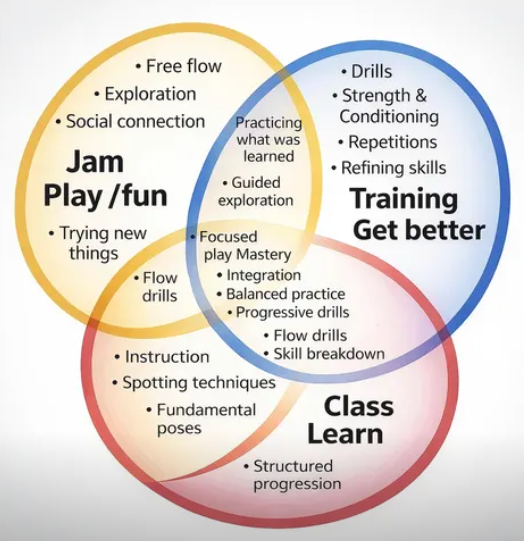
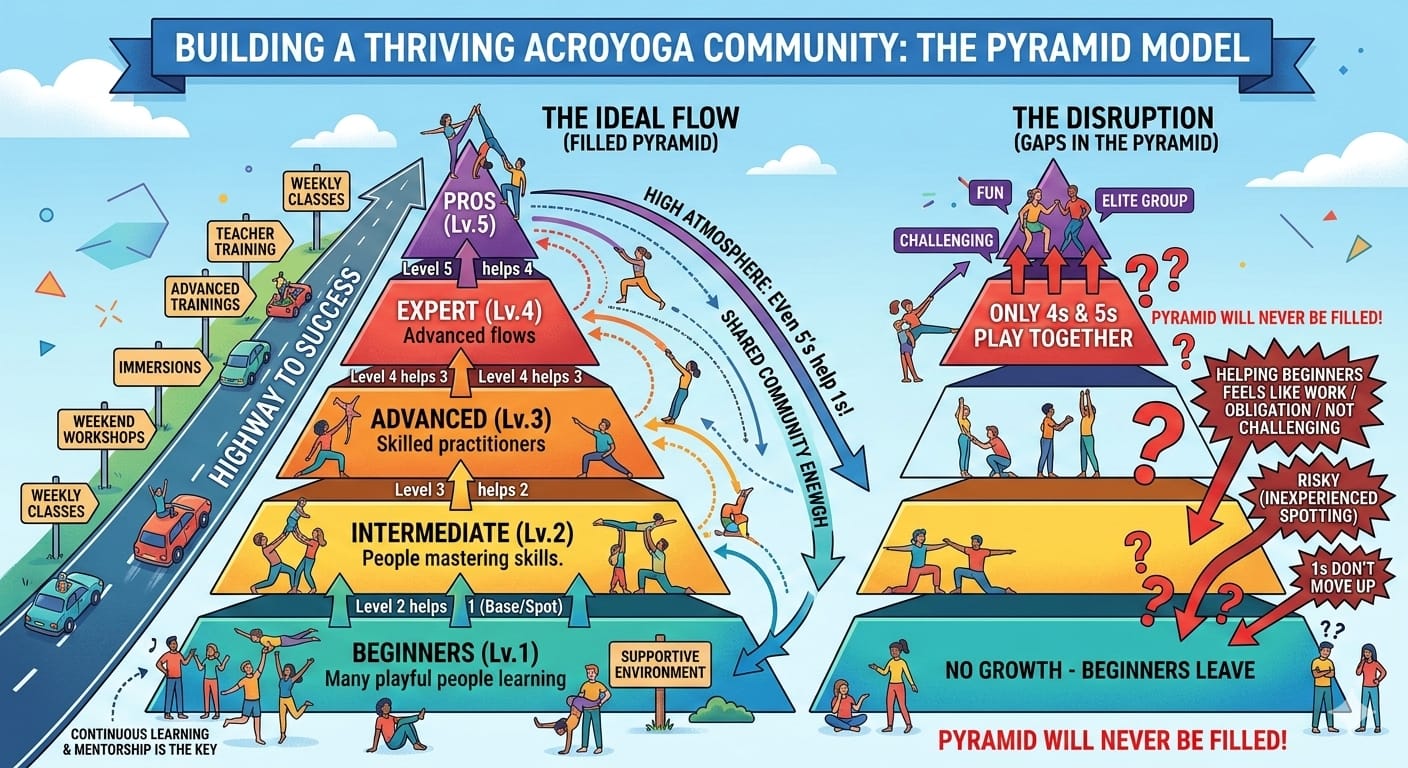
Some people point to classes and workshops as the missing link. They help Level 1 and 2 progress faster. At the same time, many Level 4 and 5 have invested a lot of time, energy, and money in training, so they prefer not to offer the same guidance for free at every jam.
Other critical and weak points in the model according to ChatGPT
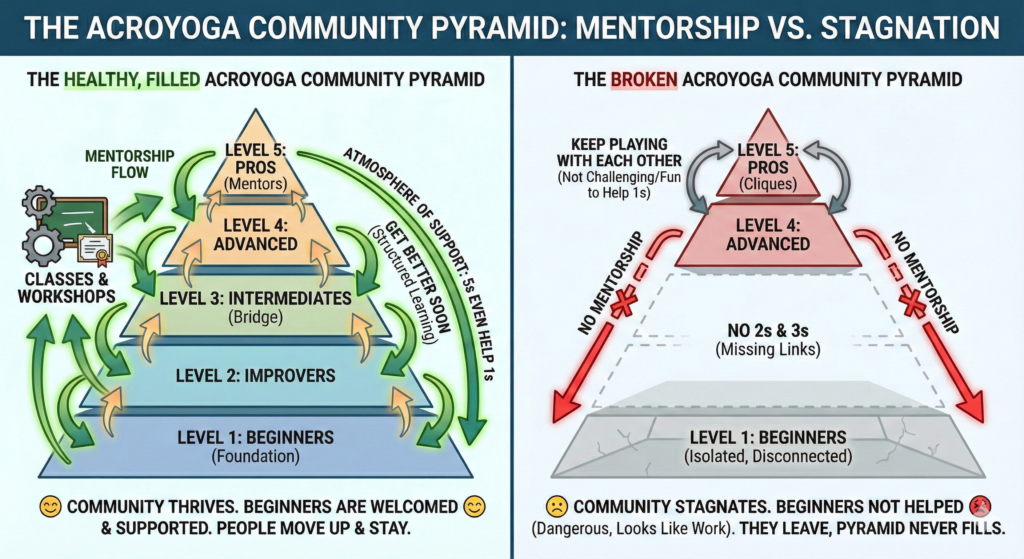
Too binary : Real communities sit on a spectrum. You can have a warm vibe and still have skill cliques.
Levels look fixed : People change by day. Someone can be “Level 4” in basing and “Level 1” in spotting or washing machines.
Labels can shame : “Pros,” “beginners,” “broken” can trigger ego, defensiveness, or insecurity, which can worsen the very dynamics you want to solve.
Skill ≠ social safety
A high skill person can ignore consent or dominate space. A newer person can be a great spotter and culture carrier.
It centers technical progress : Not everyone comes to “level up.” Some come for community, movement, play, rehab, nervous system safety, or just connection.
It hides power dynamics : Who sets norms. Who gets attention. Who decides what is “good.” Informal leaders shape the room more than skill pyramids.
It underplays “middle leadership” : You show Levels 2 and 3 as bridges, but the real bridge is often hosts, facilitators, and consistent spotters.
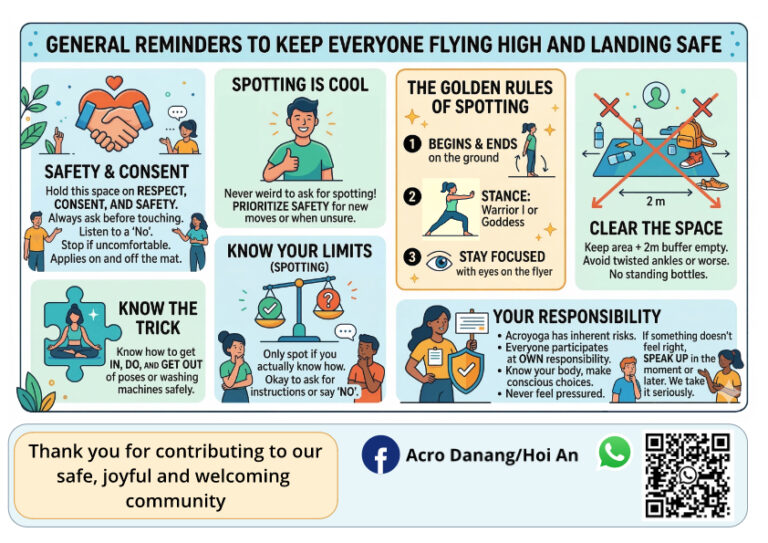
It ignores structure : A jam with no intro circle, no consent reminders, no spotting culture, no rotation norms can fail even with many intermediates.
It treats help like a single thing : “Help” can mean spotting, coaching, partnering, welcoming, or sharing space. Each has different costs and boundaries.
It misses access and inequality : Money, time, injuries, language, gender dynamics, body differences, and travel ability affect who becomes 4 or 5 and who feels welcome.
It skips safety and risk management : Progress depends on risk tolerance and injury history. Some people avoid certain skills for good reasons.
It assumes beginners leave because of “no help” : People also leave because of scheduling, cliques, romantic drama, unclear norms, intimidation, noise, heat, crowding, or poor floor space.
It can become a self fulfilling story : If you frame a group as “broken,” people may act like it. If you frame it as “growing,” people often step up.
It doesn’t show incentives : Advanced people may avoid coaching at jams because of burnout, boundaries, liability, or paid teaching conflicts.
It underestimates emotional labor : Welcoming newcomers, mediating conflict, and holding consent culture takes real energy, and it often falls on the same few people.
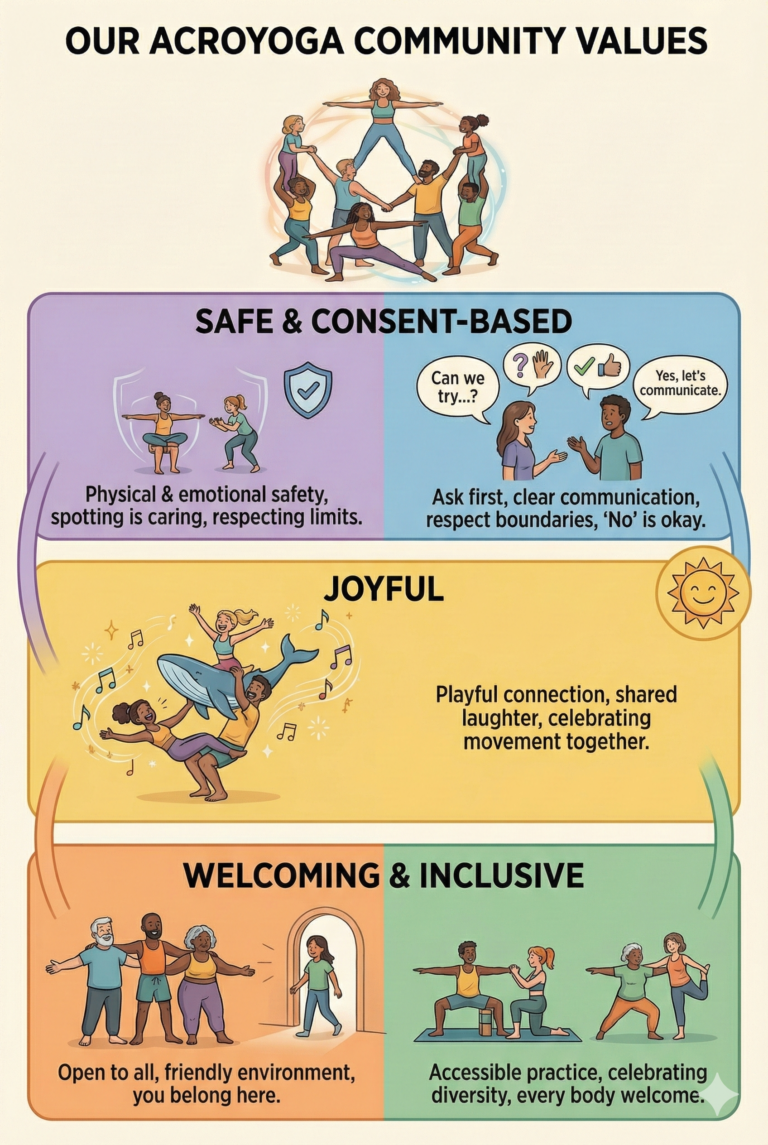
It lacks a “healthy boundaries” lane : A good community allows “No coaching today” and still stays inclusive through rotation, matching, and clear norms.